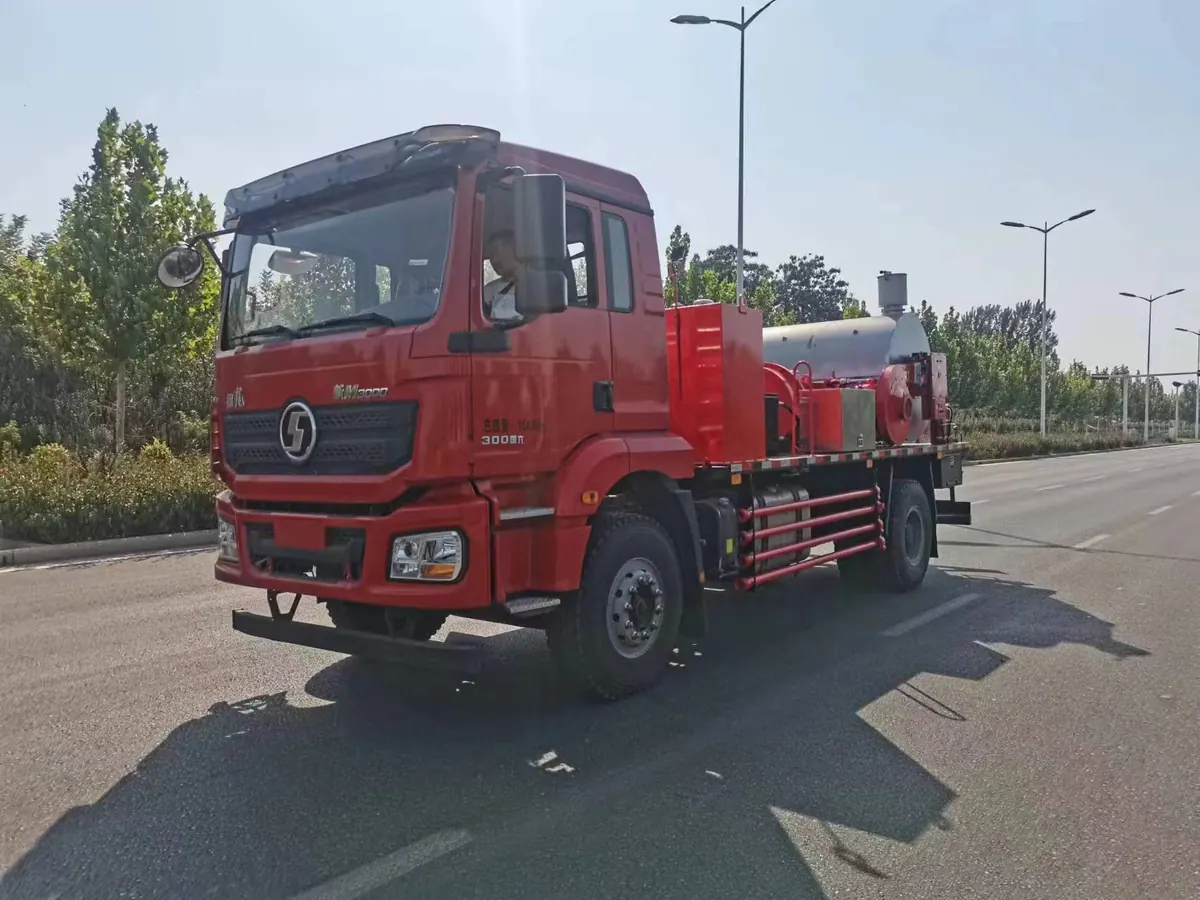
Confirm the actual heated-fluid and circulation assignment
The hot oil flushing unit supplies a selected heating and circulation contribution. Establish the actual fluid, useful thermal duty, simultaneous pressure and rate, working duration and receiving boundary. Separate catalogue maxima do not establish one supported case. Coil, burner, pump, tank and control functions require an identified configuration and relevant provider evidence; dual-fuel capability and other options are not assumed standard.
Equipment capability does not approve every formulation, remove every type of deposit or guarantee a well-production result. Keep steam generation, separately proposed heat-transfer circuits, returned-fluid treatment and well-control duties explicit rather than infer them from a hot-oil label. The complete treatment and external fluid path require competent project review, actual manufacturer information and approved operating procedures.
Describe the expected return stream
Record likely water, wax, solids, gas and chemical contamination rather than assuming that returning liquid matches the fresh charge. Heating and circulation may mobilize material from the system. The receiving tank, filtration and any reuse route must be compatible with the expected composition and temperature. Obtain the owner’s requirements for segregation and handling before selecting the recovery arrangement.
Separate collection from reuse approval
Collecting liquid in a tank does not make it suitable for recirculation. Define inspection or sampling needed before reuse, and specify the limits of strainers or filters. Fine particles and dissolved contaminants may remain after visible solids are removed. Review the heater and pump supplier’s fluid requirements whenever recovered liquid could re-enter the equipment.
Close the inventory balance
Track fresh charge, additions, recovered volume and material sent for disposal. Allow for material retained in hoses and equipment when interpreting discrepancies. Label retained samples and waste containers with the job reference. Keep responsibility for transport and waste acceptance explicit, so the end of pumping does not leave an unassigned inventory at the site.
Evidence to collect for this decision
| Condition | Review action | Useful evidence |
|---|---|---|
| Variable return quality | Provide segregation capacity | Expected fluids and sampling plan |
| Proposed reuse | Check heater and pump requirements | Acceptance limits and treatment scope |
| Unreconciled volume | Review transfers and retained inventory | Job fluid balance |
Keep these observations with the equipment reference and operating conditions. When comparing proposals or service findings, check that each record describes the same configuration and duty. Resolve missing inputs with the responsible engineer before treating an estimate as an accepted operating limit.
Make the equipment boundary visible to both crews
A practical interface drawing identifies the supplier and owner responsibility at every process, utility and control connection. Show the equipment position and the space required for access, inspection and removal of service parts. State what arrives with the unit and what the receiving site must supply. Include any temporary equipment used only during a transition, because it can govern whether the planned sequence is workable.
Review the arrangement with the people who operate the connected systems. Agree how they recognize readiness, communicate a change and stop if the conditions are outside the approved plan. Keep the drawing and operating sequence consistent after field changes. A successful connection is more than matching fittings: the equipment must receive the required supply, deliver into an acceptable destination and respond coherently when either becomes unavailable. Record unresolved interfaces before they become assumptions made separately by two crews.
Apply the review to the offered hot oil flushing unit
Describe the complete heated-fluid circuit and the location at which the treatment condition is required. Include the return stream, expected contamination and recovery destination. The heater outlet rating is one equipment boundary; useful thermal delivery must be evaluated through the actual circulation route.
- Target outlet temperature: record the project range and identify whether the value is measured, calculated or still provisional.
- Circulation pressure: state the accepted limit and the equipment or process boundary to which it applies.
- Required flow rate: include variation through the job instead of relying only on the normal operating value.
- Fluid compatibility: identify the responsible supplier or site team and the evidence needed before acceptance.
- Hazardous-area requirements: review the case that governs this requirement and retain its basis with the equipment records.
The complete package is intended for heating and circulating oil or compatible fluid to dissolve paraffin and restore flow through wells and production lines. Confirm the scope of the duty-selected coil heater, selected circulation pump, insulated fluid tank, temperature and flame-safety controls against the selected duty. Use the specifications and sizing guide for the broader equipment requirements and the RFQ checklist to organize the supporting documents.
Questions about this equipment decision
Can recovered hot oil always be circulated again?
No. Its temperature, contamination and compatibility must satisfy the equipment and project requirements before reuse.
What information helps review this hot oil flushing unit requirement?
Provide expected fluids and sampling plan; acceptance limits and treatment scope; job fluid balance, together with the installed equipment identification and the proposed operating conditions.
References and project support
Paraffin management methods provides additional background. For the equipment range and company information, visit Vance Petroleum. Share the relevant duty and records when requesting a project-specific review.